Côte d’Ivoire is currently facing a silent but profound environmental crisis: the gradual disappearance of its forests. Long recognized for its rich forest cover, it is now one of the West African countries most affected by deforestation. This reality, widely documented by national and international institutions, is jeopardizing ecosystems, people’s livelihoods, and the country’s climate stability.
The available data paint an alarming picture. Côte d’Ivoire’s forests, once an ecological and economic pillar, have shrunk considerably over the decades under the combined effects of extensive agriculture, mining, and demographic pressure.
A disappearing forest heritage
The figures speak for themselves. Estimates from the FAO and national forestry services indicate that nearly 80% of Côte d’Ivoire’s forest cover has disappeared since the 1960s. The forest area, once estimated at over 16 million hectares, fell to around 2.9 million hectares in 2009.
This rapid erosion has profoundly transformed the landscape. In several regions, classified forests and protected areas have been fragmented, sometimes invaded by human activities incompatible with their original purpose. Aware of this critical situation, Côte d’Ivoire has set itself an ambitious goal: to increase national forest cover to 20% of the territory by 2030. This goal highlights both the scale of past losses and the urgency of action.
Agriculture at the heart of the problem
Agricultural expansion remains the main cause of deforestation in Côte d’Ivoire. Recent scientific research shows that cocoa cultivation, a pillar of the national economy, has contributed significantly to forest destruction. A study published in 2023 in the journal Nature Food reveals that nearly 386,000 hectares of protected forests have been destroyed in Côte d’Ivoire and Ghana over a period of twenty years, largely due to the expansion of cocoa plantations. This dynamic can be explained by predominantly extensive agricultural practices. In many rural areas, yield improvements remain limited, prompting producers to open up new plots in the forest. Ultimately, this strategy weakens the soil, reduces biodiversity, and compromises the very sustainability of Ivorian agriculture.
Mining, an additional pressure
In addition to this agricultural pressure, there are mining activities, particularly artisanal gold mining. Research carried out by the Swiss Federal Science and Technology Research Centre highlights the destruction of more than 5,600 hectares of forest between 2001 and 2020 as a result of mining activities in Côte d’Ivoire. These operations, which are often poorly regulated, leave behind degraded soil, polluted waterways, and permanently altered ecosystems. In some areas, natural regeneration becomes virtually impossible, exacerbating the environmental and social vulnerability of the territories concerned.
Serious impacts on the environment and populations
Deforestation is not limited to the loss of trees. It leads to a significant reduction in biodiversity, disrupts hydrological cycles, and increases soil erosion. International environmental reports also highlight a deterioration in the quality of water resources, with direct repercussions on the health of populations. On a social level, rural communities are on the front line. The scarcity of forest resources affects incomes, reduces access to non-timber forest products, and undermines food security. In the long term, this situation exacerbates poverty and territorial inequalities.
Real but still fragile institutional responses
Faced with the scale of the challenge, the Ivorian authorities have launched several programs to combat deforestation. Official data indicate that the annual rate of forest loss fell to around 26,000 hectares between 2019 and 2021, compared to nearly 300,000 hectares per year in previous decades. This change is attributed in particular to reforestation policies, the promotion of agroforestry, and carbon financing mechanisms. In 2024, Côte d’Ivoire received $35 million in funding from the World Bank in recognition of its efforts to reduce CO₂ emissions by around 7 million tons. Despite these advances, the results remain fragile and uneven due to the persistence of illegal activities and a lack of control on the ground.
The strategic role of the NGO MOUCHOIR BLANC
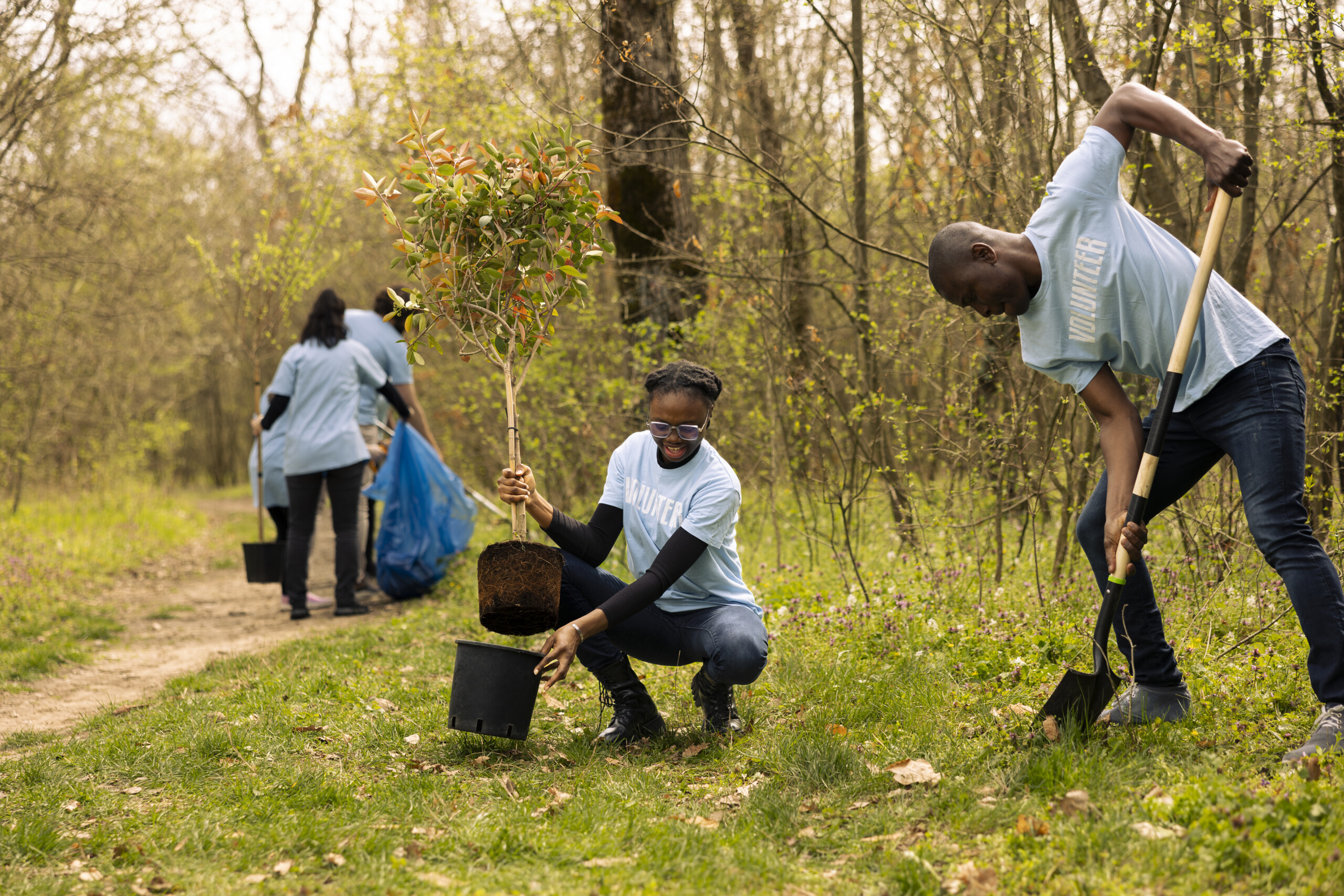
In this context, the NGO MOUCHOIR BLANC intends to become actively involved in the fight against deforestation. Its approach is based on the conviction that protecting forests also requires citizen mobilization and environmental education. The NGO aims to raise awareness among local communities, particularly young people and agricultural stakeholders, of the issues surrounding forest conservation. Through field campaigns, educational activities, and participatory reforestation initiatives, MOUCHOIR BLANC seeks to encourage more sustainable and responsible practices. In addition, the organization intends to contribute to advocacy for more rigorous enforcement of environmental policies and transparent management of forest resources, in conjunction with local authorities and technical partners.
Conclusion
Deforestation in Côte d’Ivoire is a documented, measurable phenomenon with multiple consequences. Available data show that, despite the efforts made, pressure on forests remains high. The challenge is therefore clear: to preserve what remains of the forest heritage while restoring degraded ecosystems. In this context, the action of civil society is essential. Through its commitment, the NGO MOUCHOIR BLANC wishes to contribute to building a more sustainable future, where the protection of forests becomes a collective responsibility for the benefit of present and future generations.